
- This event has passed.
OKAND Webinar: Empathetic Nutrition Counseling for the Disability Community
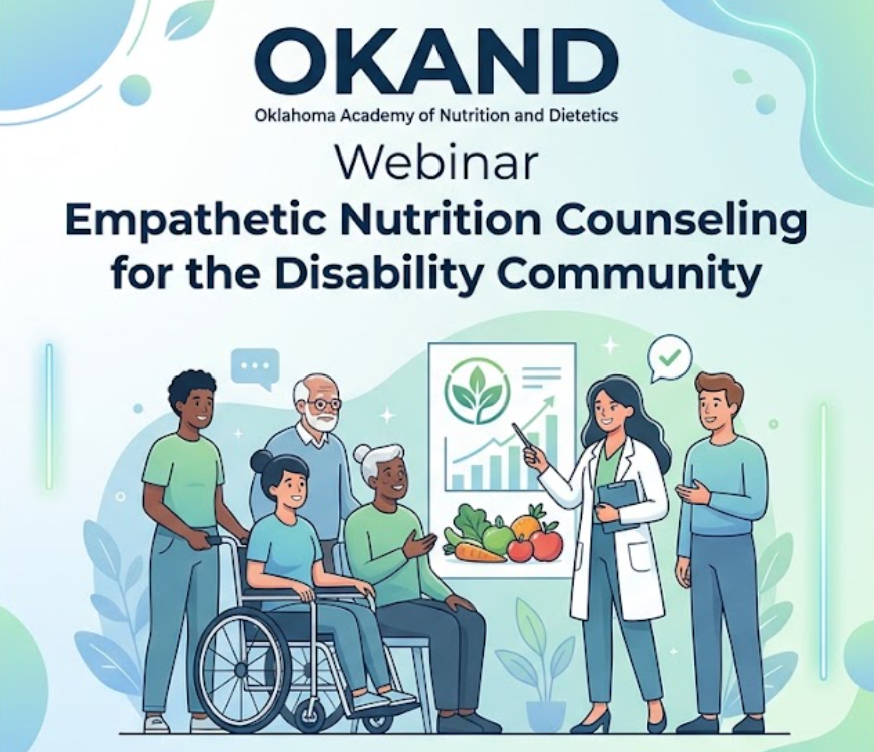
According to the CDC, over 70 million adults in the United States reported having a disability in 2022, which is more than 1 in 4 adults. The U.S. Census Bureau estimates that about 42.5 million Americans have a disability, which is 13% of the civilian noninstitutionalized population. The most common types of disability in the U.S. involve difficulties with walking, independent living, or cognition. People with disabilities are often affected by limited health literacy, which can lead to poor health outcomes and increased healthcare costs. People with disabilities may have low health literacy while having poor self-management skills and are less likely to use preventive healthcare services. People with low health literacy may have poor communication skills with healthcare professionals and may be less likely to engage in decision-making. People with low health literacy may have trouble navigating the healthcare system and may be more likely to visit the emergency department or be hospitalized. Dietitians may need to educate themselves in the future about the reasons why people with disabilities may have lower health literacy in their lives.
Tracy Williams appreciates the opportunity to teach dietitians, dietetic interns, and dietetic students about the disability community. She discusses facts and statistics about the disability community. She also talks about her personal experiences of living with the disability of moderate cerebral palsy and other chronic conditions. She loves to share her thoughts on adaptive cooking, universal design in the family kitchen, adaptive meal ideas, and adaptive fitness and sports. She appreciates being a thought leader in how dietitians can rethink how they counsel members of the disability community about their health and healthy lifestyle goals.
Learning objectives:
1. Demonstrate knowledge of disability etiquette in their role as empathetic nutrition counselors for clients with disabilities.
2. Counsel clients with disabilities on solutions to challenges to food access.
3. Strategize how clients with disabilities can meet personal meal planning and healthy lifestyle goals.
4. Explain how clients with disabilities can manage secondary conditions
Zoom link will be sent out on the morning of the event to the email address used to purchase the ticket.
1.0 Hour CEU